Uses
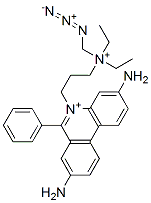
Propidium monoazide is a photoreactive DNA-binding dye that preferentially binds to dsDNA. Propidium monoazide (PMA) prevents DNA from dead bacteria from being amplified during the PCR. PMA-PCR enhanced both the specificity and the sensitivity of PCR[1]. Propidium monoazide is a click chemistry reagent, it contains an Azide group and can undergo copper-catalyzed azide-alkyne cycloaddition reaction (CuAAc) with molecules containing Alkyne groups. It can also undergo strain-promoted alkyne-azide cycloaddition (SPAAC) reactions with molecules containing DBCO or BCN groups.
Biological Activity
Propidium monoazide (PMA) is a propidium derivative with an azide group th at allows crosslinkage to DNA upon light exposure. PMA is only permeable to bacteria with compromised membrane integritymaking it highly selective for sick/dying/dead cells over healthy cells. PMA is typically added to cell samples (50 μM for 1-15 min in the dark) prior to cross-linking induction (650-W halogen light source)washing and DNA extraction. Due to its higher chargePMA (+2) is less permeant to live cells and more selective than ethidium monoazide/EMA (+1) for dead cells. The stained cells can also be viewed and analyzed by fluorescence microscopy.