Description
Ametoctradin is a fungicide approved for use in many countries for the control of economically damaging fungal diseases on fruit and vegetables. It has a low aqueous solubility and a low volatility. It tends not to be persistent in soils but can be in aquatic bodies under certain conditions. Based on the substances chemical properties there is a low risk of it leaching to groundwater. It generally has a low to moderate toxicity to biodiversity. It is not highly toxic to humans and no chronic health impacts have been identified.
Uses
Ametoctradin acts as a pesticide, and is used in fomulations of insecticides and fungicides.
Definition
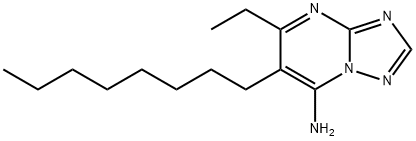
ChEBI: A member of the class of triazolopyrimidines that is [1,2,4]triazolo[1,5-a]pyrimidin-7-amine carrying additional ethyl and octyl substituents at positions 5 and 6 respectively. A fungicide for the control of late blight and downey mildew on po
atoes and other crops including vines.
Mechanism of action
Selective, preventative, mitochondrial respiration inhibitor by interferring with complex III
Synthesis
Ametoctradin (5-ethyl-6-octyl-[1,2,3]triazolo[1,5-a]pyriMidin-7-aMine) was synthesized through four steps from methyl 3-oxopentanoate and 1h-1,2,4-triazol-5-amine,and its structure was confirmed by 1h Nmr[1].
References
[1] Synthesis of Ametoctradin and Its Bioactivity. Proceedings of the 15th Annual Meeting of the Pesticide Professional Committee of the Chemical Industry and Engineering Society of China.