[1] Alberati D, et al. Glycine reuptake inhibitor RG1678: A pharmacologic characterization of an investigational agent for the treatment of schizophrenia. Neuropharmacology. 2012 Feb;62(2):1152-61. DOI:
10.1016/j.neuropharm.2011.11.008[2] Pinard E, et al. Selective GlyT1 Inhibitors: Discovery of [4-(3-Fluoro-5-trifluoromethylpyridin-2-yl)piperazin-1-yl][5-methanesulfonyl-2-((S)-2,2,2-trifluoro-1-methylethoxy)phenyl]methanone (RG1678), a Promising Novel Medicine To Treat Schizophrenia. J Me DOI:
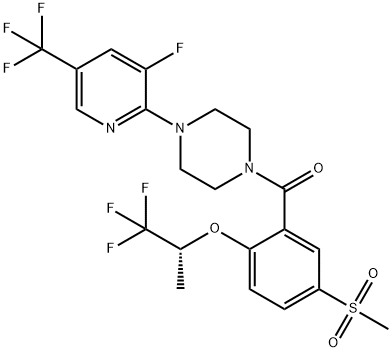
10.1021/jm100210p[3] Alberati, Daniela; Moreau, Jean-Luc; Lengyel, Judith et al. Glycine reuptake inhibitor RG1678: A pharmacologic characterization of an investigational agent for the treatment of schizophrenia. Neuropharmacology (2012), 62(2), 1152-1161. DOI:
10.1016/j.neuropharm.2011.11.008[4] Hofmann C, Banken L, Hahn M et al. Evaluation of the Effects of Bitopertin (RG1678) on Cardiac Repolarization: A Thorough Corrected QT Study in Healthy Male Volunteers. Clin Ther. 2012 Oct;34(10):2061-71. DOI:
10.1016/j.clinthera.2012.08.010[5] Martin-Facklam M, Pizzagalli F, Zhou Y et al. Glycine Transporter Type 1 Occupancy by Bitopertin: a Positron Emission Tomography Study in Healthy Volunteers. Neuropsychopharmacology. 2012 Nov 7. doi: 10.1038/npp.2012.212. [Epub ahead of print] DOI:
10.1038/npp.2012.212