Potential Exposure
It is used to make pharmaceuticals;
rust-proofing compounds and plasticizers; as a food additive;
stabilizing agent.
First aid
If this chemical gets into the eyes, remove any
contact lenses at once and irrigate immediately for at least
15 minutes, occasionally lifting upper and lower lids. Seek
medical attention immediately. If this chemical contacts
the skin, remove contaminated clothing and wash immediately
with soap and water. Seek medical attention immediately.
If this chemical has been inhaled, remove from
exposure, begin rescue breathing (using universal precautions,
including resuscitation mask) if breathing has
stopped and CPR if heart action has stopped. Transfer
promptly to a medical facility. When this chemical
has been swallowed, get medical attention. Give large
quantities of water and induce vomiting. Do not make an
unconscious person vomit.
Shipping
UN3077 Environmentally hazardous substances,
solid, n.o.s., Hazard class: 9; Labels: 9-Miscellaneous hazardous
material, Technical Name Required.
Incompatibilities
Contact with strong caustics causes the
release of ammonia gas.
Chemical Properties
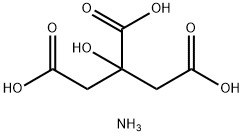
Ammonium citrate (various forms) is a white
powdery material with a slight ammonia-like odor.
Waste Disposal
May be flushed to sewer with
large volumes of water.
Uses
In analytical chemistry, 2-Hydroxy-1,2,3-propanetricarboxylic acid/ammonia,(1:x) is used as a chemical reagent and complexing agent to determine phosphates and available phosphoric acid in fertilizers; in the electroplating industry, it is used as a cyanide-free electroplating complexing agent; in the machinery industry, it is used to formulate rust inhibitors; and it is also used in the pharmaceutical and other industries.