Production Methods
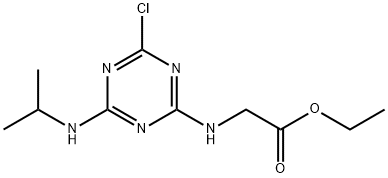
Proglinazine was produced through a manufacturing sequence typical of substituted triazinone chemistry. Industrial routes generally began with cyanuric chloride, which was subjected to stepwise nucleophilic substitution: first with an appropriate amine to introduce the primary side chain, then with a secondary amine or heterocycle to complete the substitution pattern that defines proglinazine’s herbicidal structure. Each substitution step required careful temperature control to ensure selectivity among the three chlorine atoms on the triazine ring. After neutralisation and isolation of this intermediate, the ethyl ester functionality was installed by reacting the appropriate carboxylate or acylating agent with the remaining reactive site on the triazinone framework.