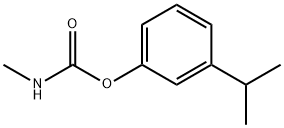
Uses
3-Isopropylphenyl Methylcarbamate is a potential human-safe insecticide against the malaria mosquito.
Production Methods
This carbamate pesticide was manufactured using the same general multipurpose plant processes applied to other aryl N methylcarbamates of the 1950s–1970s. Commercial production began with synthesis of the m cumenol (3 isopropylphenol) intermediate, typically obtained by alkylation or fractionation of mixed cresol streams. This phenolic intermediate was then reacted with methyl isocyanate or, in earlier processes, with methylcarbamoyl chloride in the presence of a base. The MIC route, common across the carbamate industry, required strictly anhydrous conditions, inert gas blanketing, and careful temperature control because the reaction is highly exothermic. The resulting aryl N methylcarbamate was purified by aqueous workup, solvent exchange, and vacuum stripping to yield technical grade material.
General Description
Pure white solid without appreciable odor. Used as an insecticide to protect cotton, fruit, vegetables and field crops. Not registered as a pesticide in the U.S.
Reactivity Profile
MIP is a carbamate ester. Carbamates are chemically similar to, but more reactive than amides. Like amides they form polymers such as polyurethane resins. Carbamates are incompatible with strong acids and bases, and especially incompatible with strong reducing agents such as hydrides. Flammable gaseous hydrogen is produced by the combination of active metals or nitrides with carbamates. Strongly oxidizing acids, peroxides, and hydroperoxides are incompatible with carbamates.
Health Hazard
MIP is a cholinesterase inhibitor.
Fire Hazard
(Non-Specific -- Carbamate Pesticide, Solid, n.o.s.) Container may explode in heat of fire. When heated to decomposition, MIP emits toxic fumes of nitrogen oxides. Incompatible with alkalis. Avoid decomposing heat.
Mechanism of action
Broad-spectrum. Acetylcholinesterase (AchE) inhibitor.
Pesticide Type
Insecticide