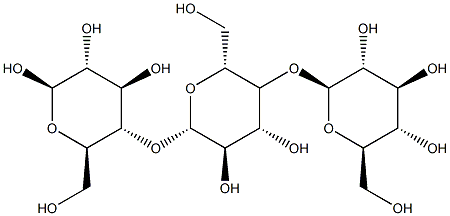
Preparation
Viscose rayon is obtained by reacting the hydroxy groups of cellulose with car- bon disulfide in the presence of alkali to give xanthates. When this solution is poured (spun) into an acid medium, the reaction is reversed and the cellulose is regenerated (coagulated).
Industrial uses
Rayon is a general name for artificial-silk textile fibers or yarns made from cellulose nitrate, cellulose acetate, or cellulose derivatives. In general, the name rayon is limited to the viscose, cuprammonium, and acetate fibers, or to fibers having a cellulose base. Other synthetic-fiber groups have their own group names, such as azlon for the protein fibers and nylon for the polymeric amine fibers, in addition to individual trade names.
Viscose rayon is made by treating the cellulose with caustic soda and then with carbon disulfide to form cellulose xanthate, which is dissolved in a weak caustic solution to form the viscose.
Rayons manufactured by the different processes vary both chemically and physically.