Example 72: General procedure for the synthesis of the potassium salt of 4-cyano-1-(2-trimethylsilyl-ethoxymethyl)-1H-imidazole-2-carboxylate
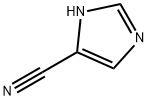
a) Synthesis of 1H-imidazole-4-carbonitrile
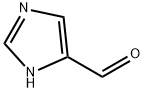
In a 22-L four-necked round-bottomed flask equipped with a mechanical stirrer, temperature probe, condenser, and charging funnel with nitrogen inlet, 1H-imidazole-4-carboxaldehyde (Aldrich, 1.10 kg, 11.5 mol) and pyridine (3.0 L, 3.0 mol) were added. The reaction flask was cooled to 8°C using an ice bath and hydroxylamine hydrochloride (871 g, 12.5 mol) was added slowly in batches, keeping the internal temperature below 30°C. The reaction mixture was cooled to ambient temperature and stirred at that temperature for 2 hours. Subsequently, the resulting thick yellow solution was heated to 80°C with a heating jacket and acetic anhydride (2.04 L, 21.6 mol) was added dropwise over a period of 200 min, keeping the temperature below 110°C during the dropwise addition. The reaction mixture was heated at 100 °C for 30 min and then cooled to ambient temperature and further cooled in an ice bath. The pH was adjusted to 8.0 (monitored using a pH meter) by adding 25 wt% NaOH solution (5.5 L) while maintaining the internal temperature below 30°C. The reaction mixture was transferred to a 22-L split funnel and extracted with ethyl acetate (6.0 L). The combined organic layers were washed with brine (2 x 4.0 L), dried over MgSO4, filtered, and concentrated to dryness under reduced pressure at 35 °C to give the crude product as a yellow semi-solid. The semi-solid was suspended in toluene (3.0 L), stirred for 1 h and filtered to give a light yellow solid. The solid was again suspended in toluene (3.0 L), stirred for 1 hour and filtered. The resulting slurry was filtered and the cake was washed with toluene (2 x 500 mL) to give the title compound as a light yellow solid (870 g, 82% yield).1H and 13C NMR spectra were consistent with the target structure.