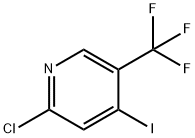
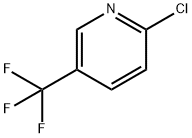
The general procedure for the synthesis of 2-chloro-5-trifluoromethyl-4-iodopyridine from 2-chloro-5-trifluoromethylpyridine was as follows: diisopropylamine (3.3330 g, 32.94 mmol) and anhydrous THF (33 mL) were added to 100 mL of a cigar shaped flask and protected under Ar atmosphere. The reaction system was cooled to -78 °C, n-butyllithium (1.58 M hexane solution, 20.8 mL, 32.86 mmol) was slowly added dropwise and stirred at the same temperature for 10 min. Subsequently, 2-chloro-5-trifluoromethylpyridine (5.4616 g, 30.08 mmol) dissolved in anhydrous THF (30 mL) was added slowly dropwise at -78 °C and stirring was continued at the same temperature for 1 hour. Next, iodine (9.2188 g, 36.32 mmol) dissolved in anhydrous THF (30 mL) was added dropwise at -78 °C and stirred at the same temperature for 30 min before slowly warming to 0 °C. The reaction was quenched by the addition of 1 M aqueous sodium thiosulfate (50 mL) at 0 °C. The reaction was extracted three times with ethyl acetate, and the organic phases were combined and dried over anhydrous sodium sulfate. After removal of the solvent by distillation under reduced pressure, the resulting residue was purified by silica gel column chromatography (BW-200,80 g, eluent 30% benzene/hexane) to afford the target product 2-chloro-5-trifluoromethyl-4-iodopyridine (4.3977 g, 14.30 mmol, 48% yield). In addition, a white powdery product was obtained by recrystallization from EtOH.