Synthesis
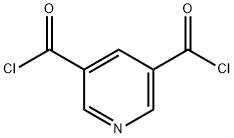
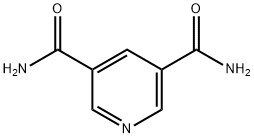
The synthesis of pyridine-3,5-dicarboxamide was carried out according to Carelli's modified method. [38] Dichloromethane was used as a co-solvent to increase the reaction interface and to prevent foaming on addition of solids. Pyridine-3,5-dicarbonyl chloride (1.61 g, 7.89 mmol) was dissolved in dichloromethane (10 mL) with vigorous stirring at room temperature and the reaction was added slowly dropwise over a period of 1 hour. The reaction mixture was filtered through diatomaceous earth and subsequently recrystallized in ethanol/water (50:50) mixed solvent. Light yellow flaky crystals of pyridine-3,5-dicarboxamide (910 mg, 3.51 mmol, 70% yield) were obtained (Rf = 0, unfolding agent dichloromethane/methanol 10:1, melting point 115 °C).
References
[1] Journal of Organic Chemistry, 2015, vol. 80, # 5, p. 2676 - 2699
[2] Journal of the Chemical Society. Perkin Transactions 1, 2002, # 4, p. 542 - 547
[3] Synthesis (Germany), 2014, vol. 46, # 9, p. 1243 - 1253
[4] Monatshefte fuer Chemie, 1914, vol. 35, p. 783,784
[5] Monatshefte fuer Chemie, 1914, vol. 35, p. 783,784