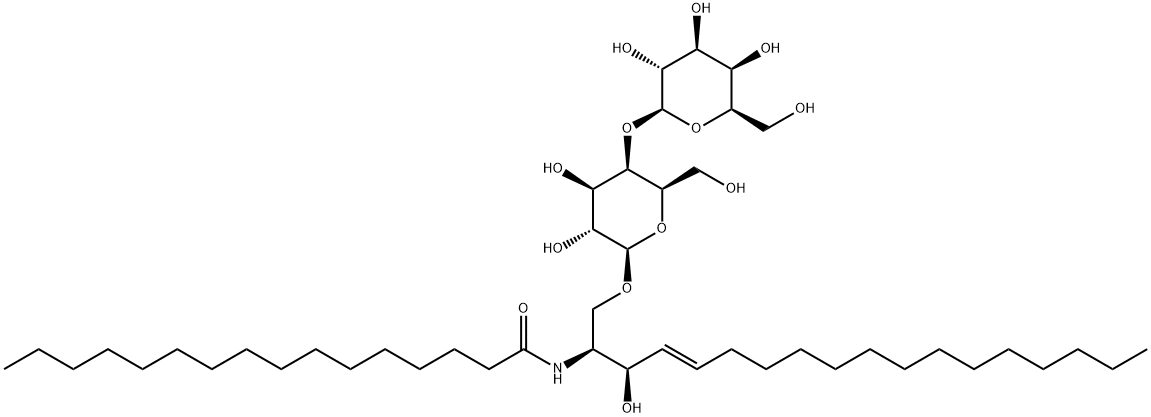
Description
C16 Lactosylceramide is an endogenous bioactive sphingolipid.
1 It forms membrane microdomains with Lyn kinase and the α
i subunits of inhibitory G protein-coupled receptors (GPCRs), suggesting a role in cell signaling. Plasma levels of C16 lactosylceramide are elevated in insulin-resistant cattle.
2 C16 Lactosylceramide is also upregulated in a mouse model of Niemann-Pick type C1 disease, a neurodegenerative cholesterol-sphingolipid lysosomal storage disorder.
3
Uses
LacCer (d18:1/16:0) (C16 Lactosylceramide (d18:1/16:0)) is an endogenous bioactive sphingolipid that can form membrane microdomains with Lyn kinase and the αi subunits of inhibitory G protein-coupled receptors (GPCRs). The levels of LacCer (d18:1/16:0) are elevated in the plasma of insulin-resistant cattle. In a mouse model of Niemann-Pick type C1 disease (a neurodegenerative cholesterol-sphingolipid lysosomal storage disorder), the expression of LacCer (d18:1/16:0) is also upregulated. LacCer (d18:1/16:0) can be used in research on metabolic diseases and neurodegenerative diseases[1][2][3].
References
1. Iwabuchi, K., Nakayama, H., Oizumi, A., et al. Role of ceramide from glycosphingolipids and its metabolites in immunological and inflammatory responses in humans Mediators Inflamm. 2015,120748(2015).
2. Rico, J.E., Bandaru, V.V., Dorskind, J.M., et al. Plasma ceramides are elevated in overweight Holstein dairy cows experiencing greater lipolysis and insulin resistance during the transition from late pregnancy to early lactation J. Dairy Sci. 98(11),7757-7770(2015).
3. Praggastis, M., Tortelli, B., Zhang, J., et al. A murine Niemann-Pick C1 I1061T knock-in model recapitulates the pathological features of the most prevalent human disease allele J. Neurosci. 35(21),8091-8106(2015).