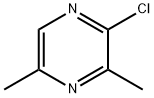
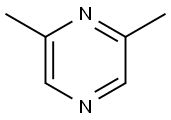
The general procedure for the synthesis of 2-chloro-3,5-dimethylpyrazine from 2,6-dimethylpyrazine was as follows: first, 7.12 g of 2,6-dimethylpyrazine and 6.5 mL of dimethylformamide (DMF) were added to a three-necked flask fitted with a dropping funnel and a thermometer, and refluxed under nitrogen protection. Subsequently, 6.7 mL of thionyl chloride was added to the dropping funnel and the reaction vessel was cooled in an ice bath. Thionyl chloride was slowly added dropwise while stirring the reaction mixture, controlling the reaction temperature in the range of 45 ± 5 °C. After the dropwise addition was completed, the reaction solution temperature was allowed to drop below 40°C and quenched by slowly adding water. After reconfirming that the temperature of the reaction solution was below 40 °C, aqueous sodium hydroxide was added to adjust the pH to 7-8. Subsequently, the reaction mixture was subjected to hydrodistillation. The distilled aqueous phase was extracted with dichloromethane and the organic layer was separated. The organic layer was dried over anhydrous magnesium sulfate and filtered, the filtrate was distilled to remove the solvent, and the residue was purified by distillation under reduced pressure to afford the target product 2-chloro-3,5-dimethylpyrazine (clear colorless liquid, 36% yield).