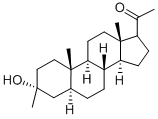
Description
Ganaxolone is a 3β-methylated synthetic analog of the neurosteroid allopregnanolone that allosterically enhances GABA
A receptor current.
1,2 At nanomolar concentrations, it can potentiate GABA-evoked currents at GABA
A receptor complexes containing α
1, α
2, α
3, β
2, and γ
2L subunits expressed in
Xenopus oocytes.
1,2 Ganaxolone has been shown to have a broad range of antiseizure activity in animal epilepsy models and human clinical trials.
3,4,5
Uses
Treatment of epilepsy and migraine.
Application
Ganaxolone (marketed as Ztalmy) is a first-in-class neuroactive steroid that acts as a positive modulator of gamma-aminobutyric acid (GABA) A receptors for the treatment of seizures associated with cyclooxygenase-dependent kinase-like 5 (CDKL5) deficiency (CDD).
Definition
ChEBI: Ganaxolone is a corticosteroid hormone.
Biological Activity
Potent positive allosteric modulator of GABA A receptors. Enhances GABA-evoked chloride currents in Xenopus oocytes expressing GABA A receptors (EC 50 values are 94, 122 and 213 nM for α 2 β 1 γ 2 L , α 3 β 1 γ 2 L and α 1 β 1 γ 2 L receptors respectively). Exerts anticonvulsive effects in a broad range of animal seizure models.
Biochem/physiol Actions
Ganaxolone (3alpha-hydroxy-3beta-methyl-5alpha-pregnane-20-one) is a positive allosteric modulator of the GABAA receptor subtype; synthetic analog of the endogenous neurosteroid allopregnanolone; effective against chemically induced seizures in rats and mice. Ganaxolone is an orally active analog of allopregnanolone that is not converted to the hormonally active 3-keto form. The enhanced anticonvulsant potency of ganaxolone after neurosteroid withdrawal supports the use of ganaxolone as a specific treatment for perimenstrual catamenial epilepsy.
Mechanism of action
Ganaxolone works by positively modulating GABAA receptors, the major inhibitory neurotransmitter receptors in the central nervous system. This modulatory effect helps reduce the frequency and severity of seizures associated with CDD.
Synthesis
The synthesis begins with protection of the keto functionality in the natural steroid pregnenolone 10.1. Using acid catalysis, reaction with boiling ethylene glycol in toluene forms the acetal 10.2 in 88% yield. Oxidation of 10.2 to form the ketone 10.3 has been accomplished by a variety of methods, including Swern, Dess-Martin, and TPAP conditions. The oxidation process depicted in Figure 3.1 demonstrates the formation of the ketone 10.3 using calcium hypochlorite and TEMPO. Next, methylation is accomplished by the addition of MeMgBr in the presence of lithium chloride and ferric chloride to afford the tertiary alcohol 10.4. Finally, removal of the acetal protecting group by treatment with iodine in dichloromethane and acetone affords ganaxolone 10 in 98% yield over the last two steps.

References
[1] R B CARTER. Characterization of the anticonvulsant properties of ganaxolone (CCD 1042; 3alpha-hydroxy-3beta-methyl-5alpha-pregnan-20-one), a selective, high-affinity, steroid modulator of the gamma-aminobutyric acid(A) receptor.[J]. Journal of Pharmacology and Experimental Therapeutics, 1997, 280 3: 1284-1295.