Production Methods
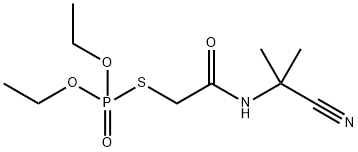
Cyanthoate would have been produced using the same multipurpose plant chemistry applied to other O,O dialkyl phosphorothioates of the 1960s–1980s. Industrial manufacture began with preparation of the O,O diethoxyphosphorochloridothioate intermediate, typically formed by reacting phosphorus oxychloride or phosphorus thiochloride with ethanol under strictly anhydrous, acid scavenged conditions. In parallel, the cyanated tertiary alkyl amide fragment, characteristic of cyanthoate’s structure. was synthesised from the appropriate cyanoalkyl precursor. These two components were then coupled in a controlled nucleophilic substitution step, usually in aromatic or chlorinated solvents, with careful temperature management to control hydrogen chloride evolution. After reaction completion, the mixture underwent aqueous neutralisation, phase separation, solvent exchange, and vacuum stripping, yielding technical grade cyanthoate.