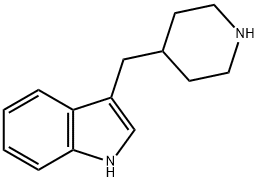
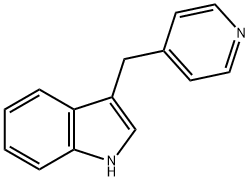
The general procedure for the synthesis of 3-(piperidin-4-ylmethyl)-1H-indole from 3-(4-pyridinylmethyl)-1H-indole was as follows: 3-(4-pyridinylmethyl)-1H-indole (5.00 g, 24.0 mmol) and acetic acid (25 mL) were added to a 250 mL stainless steel autoclave, followed by platinum(IV) oxide (1.00 g, 4.40 mmol, Johnson Matthey). The autoclave was sealed, charged with hydrogen to about 30 psi at ambient temperature, and the reaction was stirred for about 2 hours. Upon completion of the reaction, the reaction mixture was filtered to remove the catalyst and the filtrate was concentrated under reduced pressure. The concentrated residue is dissolved in ethyl acetate and subsequently washed with saturated aqueous sodium carbonate. At this point the organic layer may appear cloudy and a small amount of methanol is added until the solution is clarified. Next, the organic layer was washed sequentially with 2N aqueous sodium hydroxide and saturated brine, dried over anhydrous magnesium sulfate and filtered, and the filtrate was concentrated under reduced pressure. The resulting solid was ground with ether and dried to give the target product 3-(piperidin-4-ylmethyl)-1H-indole (4.35 g, 73% yield). The product was analyzed by LC/MS (see Table 1 for conditions, method a) with a retention time (Rt) of 1.51 min; the mass spectrum (MS) showed m/z: 215.12 ([M+H]+).