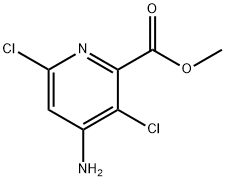
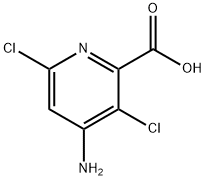
To a 2L three-necked round-bottomed flask equipped with an overhead stirrer, temperature probe, nitrogen inlet and condenser was added 4-amino-3,6-dichloropyridine-2-carboxylic acid (207 g, 1 mol, see US6353,635 for preparation) and methanol (850 mL). Concentrated sulfuric acid (118 g, 1.2 mol) was slowly added through the addition funnel over 25 min. The reaction mixture was heated to reflux and maintained for 24 hours. After confirming that the reaction was about 85% complete by LCMS analysis, the reaction mixture was cooled to room temperature, transferred to a round bottom flask and concentrated under reduced pressure. The residue was diluted with ethyl acetate and the pH was adjusted with 37% ammonium hydroxide solution to about 9. The organic phase was separated and the aqueous phase was extracted with ethyl acetate (2 x 300 mL). The organic extracts were combined, washed sequentially with water and saturated brine, dried over anhydrous sodium sulfate and filtered. The filtrate was concentrated, diluted with hexane and allowed to stand for 1 hour at room temperature to crystallize the product. The crystals were collected by filtration and dried in vacuum to give methyl 4-amino-3,6-dichloropyridinecarboxylate (180 g, 81% yield) as a pink to purple solid with melting point 138-139 °C. 1H NMR (400 MHz, CDCl3) δ 6.75 (s, 1H), 4.95 (s, 2H), 3.97 (s, 3H); ESIMS m/z 221 [ (M + H)+].