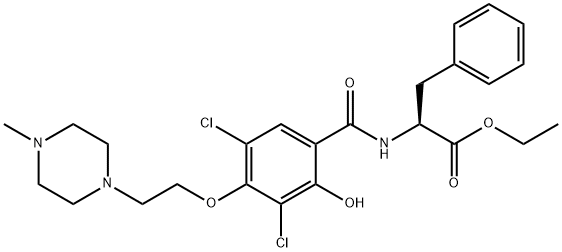
Uses
JTE-607 free base, a highly selective inflammatory cytokine synthesis inhibitor, protects from endotoxin shock in mice. JTE-607 free base inhibits inflammatory cytokine production, including TNF-α, IL-1β, IL-6, IL-8 and IL-10, from LPS-stimulated human PBMCs, with IC50s of 11, 5.9, 8.8, 7.3 and 9.1 nM, respectively[1]. Cleavage and Polyadenylation Specificity Factor 3 (CPSF3) is the target of JTE-607 free base[2].
Definition
ChEBI: JTE-607 free base is a secondary carboxamide resulting from the formal condensation of the carboxy group of 3,5-dichloro-2-hydroxy-4-[2-(4-methylpiperazin-1-yl)ethoxy]benzoic acid with the amino group of ethyl L-phenylalaninate. It inhibits cytokine production in human peripheral blood mononuclear cells (PBMC's) without causing immunosuppression. It has a role as a prodrug, an apoptosis inducer, an antineoplastic agent, an anti-inflammatory agent and a CPSF3 inhibitor. It is a L-phenylalanine derivative, an ethyl ester, a dichlorobenzene, a member of phenols, an aromatic ether, a member of benzamides, a secondary carboxamide and a N-methylpiperazine. It is a conjugate base of a JTE-607(2+). It is a tautomer of a JTE-607 zwitterion.