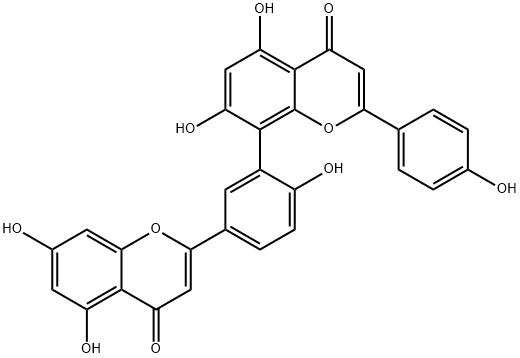
Chemical Properties
Yellow crystalline powder, easily soluble in methanol, almost insoluble in ether, derived from Selaginella and fir branches and leaves.
Uses
Amentoflavone, is isolated from an Et acetate ext. of the whole plant of Selaginella tamariscina. It has been shown to have antitumor activity, such as mitochondria-mediated apoptotic cell death. Amentoflavone can interact with many medications by being a potent inhibitor of CYP3A4 and CYP2C9, which are enzymes responsible for the metabolism of some drugs in the body.
Definition
ChEBI: Amentoflavone is a biflavonoid that is obtained by oxidative coupling of two molecules of apigenin resulting in a bond between positions C-3 of the hydroxyphenyl ring and C-8 of the chromene ring. A natural product found particularly in Ginkgo biloba and Hypericum perforatum. It has a role as a cathepsin B inhibitor, an antiviral agent, an angiogenesis inhibitor, a P450 inhibitor and a plant metabolite. It is a biflavonoid, a hydroxyflavone and a ring assembly.
Biochem/physiol Actions
Biflavonoid with anti-inflammatory, anti-viral and cancer chemopreventive activity. It inhibits vascularization of tumors by blocking the activity of angiogenic VEGFs. Blocks the induction of COX-2 and up-regulates PPAR-γ. It is a negative modulator of the GABAA receptor at the benzodiazepine binding site.
storage
Store at 2-8°C,protect from light