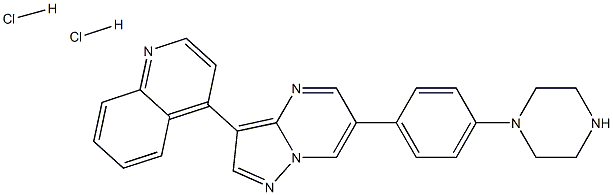
Description
LDN-193189 inhibits SMAD1/5/8 phosphorylation by the bone morphogenetic protein (BMP) type I receptors, which are known as activin receptor-like kinases (ALKs), with an IC50 value of 4.9 nM. In in vitro kinase assays, it shows specificity for ALK1, 2, 3, and 6 (IC50s = 0.8, 0.8, 5.3, and 16.7 nM, respectively) over ALK4 and 5 (IC50s = 101 and 350 nM, respectively). LDN-193189 has been used to inhibit BMP type I receptor activity to study the pathogenesis of fibrodysplasia ossificans progressive, a congenital hyperossification disorder, and to examine the role of osteogenesis in prostate tumor metastases in bone.
Uses
LDN-193189 (dihydrochloride) is a potent selective BMP type I receptor (BMP I) inhibitor. LDN-193189 efficiently inhibits transcriptional activity of the BMP type I receptors ALK2 and ALK3 with IC50 values of 5 nM and 30 nM, respectively. LDN-193189 can be used for the research of bone morphogenetic protein signalling, such as fibrodysplasia ossificans progressiva[1][2][3].
References
1) Yu?et al.?(2008),?BMP type 1 receptor inhibition reduces heterotropic ossification; Nature Med.,14?1363
2) Chambers?et al.?(2012),?Combined small-molecule inhibition accelerates developmental timing and converts human pluripotent stem cells into nociceptors; Nature Biotechnol.?30?715
3) Kreitzer?et al. (2013)?A robust method to derive functional neural crest cells from human pluripotent stem cells; Am. J. Stem Cells,?2?119
4) Lee?et al.?(2011)?BMP4 promotes prostate tumor growth in bone through osteogenesis; Cancer Res.?71?5194