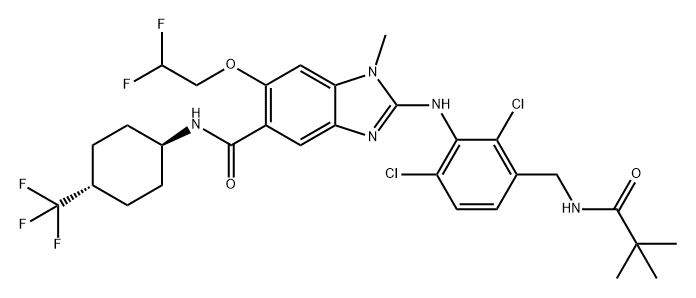
Vipoglanstat (30 mg/kg; i.p.) can reduce LPS-induced lung injury, with reduction in neutrophil influx, protein content, TNF-ɑ, IL-1β and PGE2 levels in bronchoalveolar lavage (BAL), myeloperoxidase activity, expression of mPGES-1, cyclooxygenase (COX)-2 and intracellular adhesion molecule in lung tissue[2].
Vipoglanstat (30 mg/kg; p.o.; 2 h, 8 h and 22 h) significantly reduces sepsis-induced BAL inflammatory cell recruitment, lung injury score and lung expression of mPGES-1 and inducible nitric oxide synthase[2].
Vipoglanstat (30 mg/kg; p.o.; QD) also significantly prolongs survival of mice with severe sepsis[2].
| Animal Model: | LPS-induced acute lung injury models[2] |
| Dosage: | 30 mg/kg |
| Administration: | 30 mg/kg, i.p. |
| Result: | Preserved lung architecture and reduced immune cell influx into the lungs of LPS?challenged mice. |
| Animal Model: | CLP-induced sepsis models[2] |
| Dosage: | 30 mg/kg |
| Administration: | 30 mg/kg, p.o., 2 hrs, 8 hrs and 22 hrs; 30 mg/kg, p.o., QD |
| Result: | Attenuated CLP?induced lung injury and prolongs survival. |