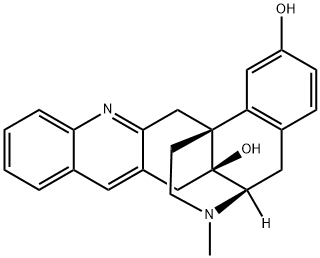
[1] Yoshioka T, et al. Delta opioid receptor agonists activate PI3K-mTORC1 signaling in parvalbumin-positive interneurons in mouse infralimbic prefrontal cortex to exert acute antidepressant-lie effects. Mol Psychiatry. 2024 Dec 6. DOI:
10.1038/s41380-024-02814-z[2] Yoshioka T, et al. KNT-127, a selective delta opioid receptor agonist, shows beneficial effects in the hippocampal dentate gyrus of a chronic vicarious social defeat stress mouse model. Neuropharmacology. 2023 Jul 1;232:109511. DOI:
10.1016/j.neuropharm.2023.109511[3] Bertels Z, et al. A non-convulsant delta-opioid receptor agonist, KNT-127, reduces cortical spreading depression and nitroglycerin-induced allodynia. Headache. 2021 Jan;61(1):170-178. DOI:
10.1111/head.14019[4] Nagase H, et al. Design and synthesis of KNT-127, a δ-opioid receptor agonist effective by systemic administration. Bioorg Med Chem Lett. 2010;20(21):6302-6305. DOI:
10.1016/j.bmcl.2010.08.083[5] Tanahashi S, et al. Novel δ1-receptor agonist KNT-127 increases the release of dopamine and L-glutamate in the striatum, nucleus accumbens and median pre-frontal cortex. Neuropharmacology. 2012;62(5-6):2057-2067. DOI:
10.1016/j.neuropharm.2012.01.005