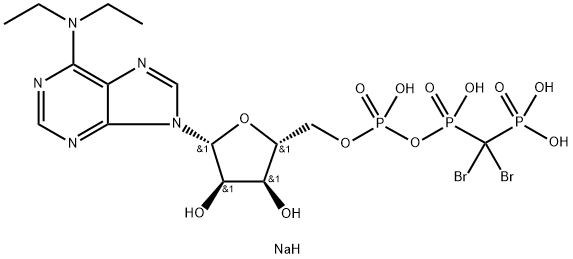
Biological Activity
arl 67156 trisodium salt is a selective inhibitor of ecto-atpase. also, fpl 67156 is a weak agonist of p2u-purinoceptors and weak antagonist of p2t- and p2x-purinoceptors [1].ecto-atpase is an integral membrane protein that catalyzes the hydrolysis of extracellular atp to adp and inorganic phosphate.arl 67156 trisodium salt is a selective ecto-atpase inhibitor. in the human blood cell assay, arl 67156 inhibited atp degradation with pic50 value of 4.62. in the rabbit ear artery, arl 67156 30 μm-1 mm) increased the contractile effects of atp and inhibited ecto-atpase with pki value of 5.2 [1]. in the guinea-pig vas deferens, arl 67156 (5-100 μm) significantly increased neurogenic contract response to nerve stimulation in a concentration-dependent way, which was due to potentiation of the action of atp [2]. in hek 293t or cos-7 cells transfected with human npp1, npp3, ntpdase1, 2, 3 or 8, arl 67156 (50-100 μm) competitively inhibited human npp1, ntpdase1 and ntpdase3 with ki values of 12, 11 and 18 μm, respectively [3].in warfarin-induced mineralization rat model, arl67156 inhibited mineralization of the aortic valve/aorta and prevented aortic stenosis by the inhibition of apoptosis. also, arl67156 normalized the level of pakt, which was involved in the survival pathway [4].
References
[1]. crack be, pollard ce, beukers mw, et al. pharmacological and biochemical analysis of fpl 67156, a novel, selective inhibitor of ecto-atpase. br j pharmacol, 1995, 114(2): 475-481.
[2]. westfall td, kennedy c, sneddon p. enhancement of sympathetic purinergic neurotransmission in the guinea-pig isolated vas deferens by the novel ecto-atpase inhibitor arl 67156. br j pharmacol, 1996, 117(5): 867-872.
[3]. lévesque sa, lavoie eg, lecka j, et al. specificity of the ecto-atpase inhibitor arl 67156 on human and mouse ectonucleotidases. br j pharmacol, 2007, 152(1): 141-150.
[4]. c?té n, el husseini d, pépin a, et al. inhibition of ectonucleotidase with arl67156 prevents the development of calcific aortic valve disease in warfarin-treated rats. eur j pharmacol, 2012, 689(1-3): 139-146.