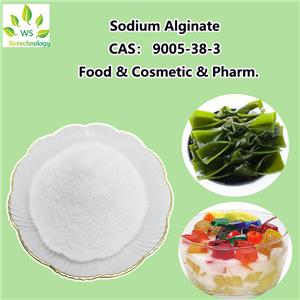
Sodium Alginate(a natural polysaccharide derived from brown seaweed) has diverse applications across multiple industries due to its **gelling, thickening, stabilizing, and biocompatible properties**. Here’s a detailed breakdown of its key uses:
1. Food Industry
- Thickener & Stabilizer: Used in ice cream, yogurt, sauces, and dressings to improve texture and prevent separation.
- Gelling Agent: Forms heat-stable gels with calcium ions (e.g., fruit caviar, jelly desserts, and molecular gastronomy "spherification").
- Edible Films/Coatings: Extends shelf life of fruits, meats, and cheeses.
2. Pharmaceuticals & Medicine
- Wound Dressings: Alginate fibers absorb wound exudate and promote healing (e.g., alginate dressings for burns/ulcers).
- Drug Delivery: Encapsulates drugs for controlled release (e.g., microspheres, tablets).
- Dental Impressions: Used as a mold material due to quick gelation.
3. Biotechnology & Tissue Engineering
- 3D Bioprinting: Serves as a bioink scaffold for cell growth and organ modeling.
- Cell Encapsulation: Protects transplanted cells (e.g., pancreatic islets for diabetes treatment).
4. Textile Printing
- Print Paste: Binds dyes in fabric printing for sharp patterns.
- Eco-Friendly Fibers: Mixed with cellulose to create biodegradable textiles.
5. Environmental Applications
- Water Treatment: Removes heavy metals (e.g., lead, cadmium) via ion exchange.
- Biodegradable Packaging: Alternative to plastic films.
6. Cosmetics & Personal Care
- Thickener: In shampoos, lotions, and face masks.
- Microencapsulation: Delivers vitamins or fragrances slowly.
7. Agriculture
- Seed Coating: Improves germination by retaining moisture.
- Fertilizer Carrier: Slow-release nutrient delivery.
8. Research & Innovative Uses
- Lab-Grown Meat: Scaffold for cultured meat production.
- Smart Materials: pH-responsive gels for sensors or actuators.


 China
China