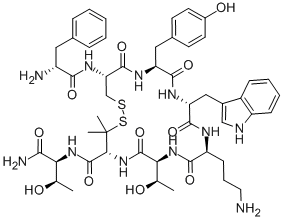
CTOP (0-0.5 nmol, ICV, once) antagonizes the analgesic effect of morphine in a dose-dependent manner[1].
CTOP (0-2 nmol, ICV, once) causes withdrawal hypothermia and a loss of body weight in morphine-dependent animals[1].
CTOP (0-1.5 nmol per side, Intra-VTA injection) enhances extracellular dopamine levels in the nucleus accumbens and dose-dependently enhances locomotor activity[2].
| Animal Model: | Male CFLP mice (25-30 g)[1] |
| Dosage: | 0, 0.001, 0.05, 0.075, 0.1, and 0.5 nmol (made up in artificial cerebrospinal
fluid (CSF) and kept in plastic tubes at -25℃ until use) |
| Administration: | Intracerebroventricular (i.c.v.) administration, once |
| Result: | Antagonized the analgesic effect of morphine in a dose-dependent manner, antagonized
the morphine-induced hypermotility in a dose-dependent manner. |
| Animal Model: | Male CFLP mice (25-30 g, Acute dependence to morphine was induced by a single dependence-inducing (100 mg/kg) dose of morphine-HC1)[1] |
| Dosage: | 0, 0.001, 0.05, 0.2, and 2 nmol |
| Administration: | Intracerebroventricular (i.c.v.) administration, once |
| Result: | Decreased the body temperature in a dose-dependent manner, and caused withdrawal hypothermia and a loss of body weight in morphine-dependent animals. |
| Animal Model: | Long-Evans hooded rats (12, male, 350-450 g)[2] |
| Dosage: | 0, 0.015, 0.15, and 1.5 nmol per side |
| Administration: | Intra-VTA (ventral tegmental area) injection |
| Result: | Enhanced extracellular dopamine levels in the nucleus accumbens, dose-dependently increased activity, whereas had no effect on feeding and drinking behavior. |