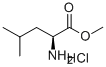
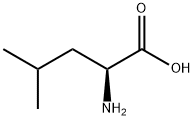
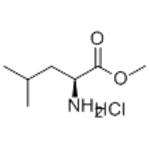
L-Leucine methyl ester is a protected form of L-Leucine (L330110). L-Leucine is an essential amino acid that induces a sharp decrease in blood glucose levels in individuals with idiopathic familial hypoglycemia, but has no known effects on normal, healthy individuals. L-Leucine also acts as an Isoleucine (I820210) antagonist in the rat, causing delays in growth, and is a potential tumour promoter of bladder cancer.
Under ice bath conditions, 60 mL of methanol was added to a 100 mL round bottom flask. 4 mL of sulfoxide chloride (SOCl2) was added slowly and dropwise through a constant pressure dropping funnel (with a drying tube fitted at the top), while the resulting off-gas was absorbed using NaOH solution. After stirring the reaction mixture for 1 h, 8 mmol of L-leucine was added and stirring was continued for 30 min at room temperature. Subsequently, the reaction system was warmed up to 66 °C and the reaction was refluxed for 6 hours. The progress of the reaction was monitored by thin layer chromatography (TLC) with an ethanol solution of 2% ninhydrin as the color developer until the raw material spot disappeared. After completion of the reaction, the solvent was removed by distillation under reduced pressure to give L-leucine methyl ester hydrochloride in 100% yield.
[1] Patent: US2014/206741, 2014, A1. Location in patent: Paragraph 0121
[2] Journal of Organic Chemistry, 2003, vol. 68, # 12, p. 5006 - 5008
[3] Synthetic Communications, 2010, vol. 40, # 8, p. 1161 - 1179
[4] Bulletin des Societes Chimiques Belges, 1991, vol. 100, # 1, p. 63 - 77
[5] Chemical Biology and Drug Design, 2012, vol. 79, # 2, p. 216 - 222