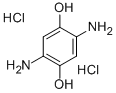
2,5-Diaminohydroquinone dihydrochloride is used in the preparation of polymers, synthetically cross-linked polyimide and silica hybrid films.
A corrosion-resistant nickel-based alloy (Hastalloy) C-type autoclave with a 1-liter volume equipped with a gas-dispersing stirrer and a cooling coil was charged with 117.3 grams (0.5 moles) of 1,4-dihydroxy-2-chloro-2,5-dinitrobenzene, 400 milliliters of glacial acetic acid, 41 grams (~0.5 moles) of NaOAc, ~7.0 grams of 10% Pd/C, and 100 milliliters of water. H2 was introduced into this sealed reactor to bring the pressure up to 400 psi and the temperature up to 40C, and the temperature was maintained at 40C to 50C during the reaction. After a short induction period, the rate of hydrogen consumption accelerates dramatically and the pressure of H2 must be maintained at 100 to 400 psi during the reaction. At the completion of the reaction, no consumption of H2 is observed. Thereafter, the reactor is cooled to room temperature, opened and 400 ml of concentrated hydrochloric acid containing 10 g of SnCl2-2H2O is added. The crude product with catalyst was separated by filtration, dissolved in 200 g of water at 85 C. and the catalyst was filtered off, water (100 to 300 ml) was added to the above filtrate starting with 500 ml of HCl, and the catalyst-free material precipitated from the brown solution. Recrystallization was carried out in the original solvent, or the semi-pure substance was isolated and air-dried to obtain 100 g of diaminoresorcinol dihydrochlorate, i.e., 2,5-diamino-1,4-dihydroxybenzene dihydrochloride, crude [96.8% yield (molar) on the basis of 2,5-diamino-1,4-dihydroxybenzene].