In food processing, as a flocculant in clarifying fruit juice products, it promotes solid-liquid separation, removes fruit acids and suspended solid particles from turbid juice, increases transparency, and improves product quality and grade. In the pharmaceutical industry, it is used as an antibacterial agent, anticoagulant, antiviral agent, anticancer agent, hemostatic agent, and dialysis membrane. In agriculture, it is used as a feed additive, an antibacterial agent against plant pathogens, and a seed surface covering agent. Chitosan hydrochloride, directly soluble in water, is a highly cationic chitosan derivative and holds promise as a drug carrier under mild preparation conditions.
Chitosan hydrochloride, as a medical dressing, has the following functions: antibacterial, promotes wound healing, stops bleeding, and absorbs wound exudate. Furthermore, chitosan can be degraded into natural metabolites by lysozyme in the body, making it non-toxic and completely absorbed by the body. However, because chitosan is insoluble in water, it only has contact antibacterial effects and cannot effectively act on the inside of wounds, greatly limiting its application in the medical field.
Chitosan hydrochloride is the chloride salt of an unbranched binary heteropolysaccharide consisting of the two units N-acetyl-D-glucosamine and D-glucosamine, obtained by partial deacetylation of chitin normally leading to a degree of deacetylation of 85% to 95%. Chitin is extracted from the shells of shrimp and crab.
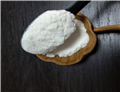
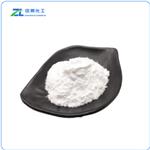
White or almost white, fine powder