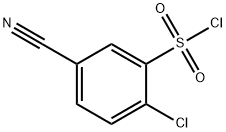
Commercially available 4-chloro-3-benzyl cyanide was dissolved in 4 parts of THF. Sodium hydrosulfide (3 eq.) was added to one part of water and stirred overnight at 45 C. TLC (hexane solution of 25% EtOAc) confirmed that the reaction was complete. THF was evaporated under vacuum and the product precipitated. The white solid was collected by vacuum filtration, washed with water and dried in a vacuum oven with gentle heating (97.0% yield). The aniline product was ground in a mortar and pestle and dissolved in a mixture of 11 parts HCl and 4 parts acetic acid. In a separate vessel, 50 parts of acetic acid were stirred with SO2 gas until saturation (confirmed by weight). The triacetic acid:aniline mixture was placed in a dry ice/ethanol bath at 10C. Sodium nitrite (1.1 eq.) was dissolved in a minimum amount of water and added dropwise to the HCl salt: aniline mixture without raising the temperature above about -5C. The resulting mixture was stirred for 45 minutes to form diazonium ions. Copper(I) chloride (0.1 eq.) and copper(II) chloride (0.25 eq.) were added to the SO2/acetic acid solution and stirred for 30 minutes and cooled to 10C in an ice bath. The diazo mixture was added to the copper (I) chloride/copper (II) chloride suspension in batches, keeping the temperature at 30 C or lower. Once completely mixed, the mixture was stirred until gas escape ceased and a dark green solution formed. The mixture was then slowly poured under stirring into 200 parts ice water until the ice melted. The resulting white precipitate, 2-chloro-5-cyanobenzene-1-sulfonyl chloride, was collected by vacuum filtration and washed with water (72.9% yield).