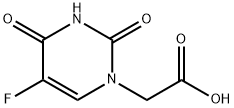
5-Fluoro-3,4-dihydro-2,4-dioxo-1(2H)-PyriMidineacetic Acid is used as an antineoplastic and antiviral agent for its ability to inhibit thymidylate synthase, an enzyme involved in DNA synthesis.
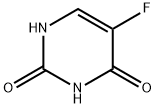
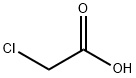
5-Fluoropyrimidine-2,4(1H,3H)-dione (5-FU, 1 g, 5.2 mmol) was used as starting material to which 10 mL of aqueous solution of potassium hydroxide (KOH, 0.60 g, 10.6 mmol) was added. The reaction mixture was stirred at 100 °C for 80 min. Subsequently, the reaction system was transferred to an oil bath at 60 °C and a solution of chloroacetic acid (84 mL, 0.5 g, 5.2 mmol) was added slowly and dropwise, and the reaction was continued with stirring for 6 hours. Upon completion of the reaction, the reaction solution was adjusted to pH=2 with dilute hydrochloric acid (HCl) and left at 4°C for 12 h for acidification. The precipitate precipitated was collected by filtration and dissolved in saturated potassium bicarbonate (KHCO3) solution. The solution was again adjusted to pH=2 with dilute hydrochloric acid to afford needle-like crystals of 2,4-dioxo-5-fluoro-3,4-dihydro-1(2H)-pyrimidineacetic acid (FUAC) in a yield of 0.82 g and 60% yield.
[1] Chemical Communications, 2011, vol. 47, # 38, p. 10713 - 10715
[2] Medicinal Chemistry Research, 2007, vol. 16, # 7-9, p. 370 - 379
[3] Nucleosides, Nucleotides and Nucleic Acids, 2011, vol. 30, # 4, p. 280 - 292
[4] Chemical Communications, 2016, vol. 52, # 30, p. 5254 - 5257
[5] Bioorganic and Medicinal Chemistry Letters, 2016, vol. 26, # 11, p. 2584 - 2588