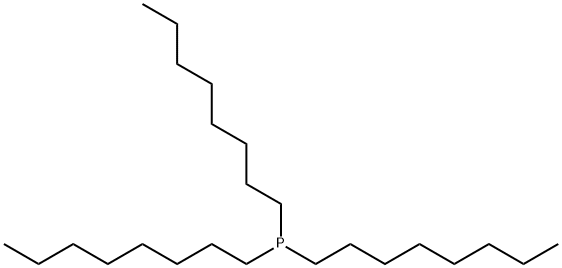
Trioctylphosphine (also known as Tri-n-octylphosphine, abbreviated as TOP) is a weakly basic organophosphorus compound that can be used in the synthesis of nanomaterials (such as metallic nanoparticles). It also serves as the most popular organophosphorus source in oil-phase synthesis, a stabiliser for certain nanorods, and acts as a solvent in certain chemical processes.
Trioctylphosphine abbreviated as TOP, is a colorless liquid with garlic odor, easily oxidized to tri-n-octylphosphine oxide in air.
Tri-n-octylphosphine is used for coating zinc sulfide shells on cadmium-selenium quantum dot core by successive ionic layer adsorption and reaction method. It acts as a precursor to trioctylphosphine oxide. Further, it is used as a solvent for cadmium and selenium precursors. It also serves as a common reagent in the chemical synthesis of nanoparticles. It acts as a precursor to trioctylphosphine oxide.
reaction type: Buchwald-Hartwig Cross Coupling Reaction
reaction type: Heck Reaction
reaction type: Hiyama Coupling
reaction type: Negishi Coupling
reaction type: Sonogashira Coupling
reaction type: Stille Coupling
reaction type: Suzuki-Miyaura Coupling
reagent type: ligand