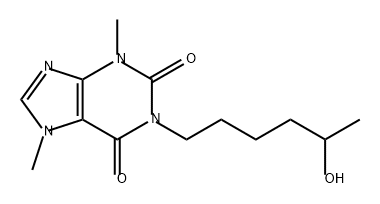
In an anhydrous and oxygen-free glove box, cobalt complex (0.005–0.04 mmol, 0.5–4 mol%) or an in-situ cobalt carbene catalytic system [i.e., a mixture of CoCl2 (0.005–0.04 mmol, 0.5–4 mol%) and a 3-aza-heterocyclic carbene ligand (0.005–0.04 mmol, 0.5–4 mol%)] and an appropriate amount of base (0.05–0.2 mmol, 5–20 mol%) were added to a 4 mL glass reaction flask containing a magnetic stir bar, followed by 0.5 mL of solvent, and finally the substrate (1 mmol). After shaking for 30 seconds, the mixture was transferred to a ParrInstruments high-pressure reactor. After removing the high-pressure reactor from the glove box, hydrogen gas at 10–30 bar was introduced, and the reaction temperature was set at 25–60 °C for 16 hours. After the reaction was stopped, the high-pressure reactor was first cooled in a 0 °C ice-water bath, and then the hydrogen gas inside the reactor was slowly released. The reaction flask was removed from the high-pressure reactor, and the product HYDROXY PENTOXIFYLLINE was separated by rapid column chromatography and weighed to obtain the yield.
Lisofylline (6493-06-7, racemic) displays anti-inflammatory activity. Regulates immune cell function and autoimmune response by inhibition of IL-12 signalling and cytokine production.1 Protects pancreatic beta cells and prevents type I diabetes in non-obese diabetic mice.2 Lisofylline reduces LPS-induced TNF alpha levels in CD-1 mice.3Cell permeable.
A major oxidative metabolite of Pentoxifylline. A potent inhibitor of phosphatidic acid generation (IC50=0.6uM). Protects mice from endotoxic shock and attenuates sepsis-induced acute lung injury in pig.
ChEBI: 1-(5-hydroxyhexyl)-3,7-dimethyl-3,7-dihydro-1H-purine-2,6-dione is a dimethylxanthine that is 3,7-dihydro-1H-purine-2,6-dione which is substituted at positions 1,3 and 7 by a 5-hydroxyhexyl group, methyl group and methyl group, respectively. It is a secondary alcohol and a dimethylxanthine.
ProTec (Cell
Therapeutics).
(±)-lisofylline is a potent anti-inflammatory agent in which only the (-) optical isomer is biologically active. (±)-lisofylline was found to inhibit the generation of phosphatidic acid from cytokine-activated lysophosphatidic acyl transferase. (±)-lisofylline could also suppress the production of the proinflammatory cytokine ifn-γ, inhibit il-12-mediated stat-4 activation, as well as enhance glucose-stimulated β-cell insulin secretion [1].
in a previous study, lisofylline was administered to female non-obese diabetic mice for 3 weeks. cytokines and blood glucose concentrations were monitored. histology and immunohistochemistry were also carried out in pancreatic sections. results showed that lisofylline was able to suppress ifn-γ production, reduce the onset of insulitis and diabetes, and inhibit diabetes [1].
[1] ZANDONG YANG Jerry L N Meng Chen. Lisofylline: a potential lead for the treatment of diabetes[J]. Biochemical pharmacology, 2005, 69 1: Pages 1-5. DOI:
10.1016/j.bcp.2004.08.012[2] Z-D YANG. The anti-inflammatory compound lisofylline prevents Type I diabetes in non-obese diabetic mice.[J]. Diabetologia, 2002, 45 9: 1307-1314. DOI:
10.1007/s00125-002-0901-y[3] WYSKA E. Pharmacokinetic-pharmacodynamic modeling of methylxanthine derivatives in mice challenged with high-dose lipopolysaccharide.[J]. Pharmacology, 2010, 85 5: 264-271. DOI:
10.1159/000288734