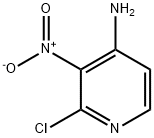
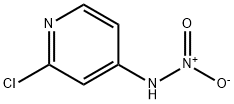
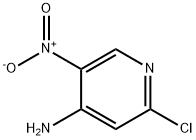
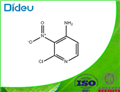
2-Chloro-4-nitroaminopyridine (CAS: 14432-13-4, 10.0 g) was used as a raw material, which was slowly dissolved in 100 mL of concentrated sulfuric acid at room temperature, followed by heating the reaction mixture to 100 °C and maintaining it for 1 hour. Upon completion of the reaction, the solution was cooled to room temperature and slowly poured into 250 g of crushed ice. The pH of the mixture was adjusted to 3 with concentrated ammonium hydroxide under cooling in an ice bath while ensuring that the temperature did not exceed 20°C. The precipitated yellow solid was separated by filtration and the aqueous phase was extracted with ethyl acetate (200 mL × 3). The organic layers were combined and concentrated under reduced pressure, and the resulting residue was purified by silica gel column chromatography with an eluent ratio of hexane:ethyl acetate (4:1 to pure ethyl acetate, v/v) to give 4-amino-2-chloro-3-nitropyridine (6.0 g, 70% yield) and 4-amino-2-chloro-5-nitropyridine (2.0 g, 25% yield). 4-amino-2-chloro-3-nitropyridine The physical properties were as follows: melting point 179-181 °C; UV (H2O) λmax 238.0 nm (ε 13586, pH 11); 1H-NMR (DMSO-d6, 500 MHz) δ 7.91 (d, J = 6.0 Hz, 1H), 7.37 (s, 2H), 6.83 (d, J = 6.0 Hz, 1H); 13C-NMR (DMSO-d6, 125 MHz) δ 149.54, 149.24, 142.69, 142.33, 122.45. 1H-NMR (DMSO-d6, 500 MHz) δ 8.85 (s, 1H), 7.37 (s, 2H), 6.96 (s, 1H) for 4-amino-2-chloro-5-nitropyridine.