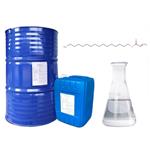
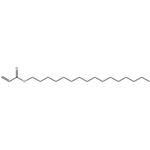
Hexadecyl acrylate is an important organic chemical raw material with a wide range of applications. Its homopolymers and copolymers with monomers such as styrene and maleic anhydride can be widely used in construction, textiles, plexiglass, adhesives and specialty plastics. It is also an effective and commonly used oil pour point depressant.
In a 250mL three-necked flask equipped with a thermometer, reflux condenser tube, stirrer, and water separator, a certain amount of hexadecanol, xylene, p-toluenesulfonic acid, and hydroquinone was added, heated to 60C to dissolve all of them, and then acrylic acid was added, and the reaction continued to be heated up to the set temperature, and the esterification reaction was basically finished when the water in the water separator was close to the theoretical value. After the end of the reaction, the reaction mixture was poured into a distillation flask, and most of the acrylic acid and toluene were distilled out under reduced pressure. The crude ester was poured into a separatory funnel and washed with a solution with w(NaOH) of 5% to remove the catalyst and the polymerization inhibitor until the aqueous layer was colorless, and then washed repeatedly with deionized water until neutral, and dried in vacuum to obtain a waxy solid hexadecyl acrylate.