Decomposition of methyl trimethylacetate
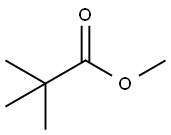
Hydrogen bromide and hydrogen chloride catalyse the decomposition of methyl trimethylacetate into isobutene, carbon monoxide, and methanol at 370-442°C and 450-48O°C, respectively. The mechanism is as follows: during the catalytic decomposition of methyl trimethylacetate or its methyl ester, water or alcohol reacts with the intermediates in a manner similar to esterification; some of the resulting esters subsequently decompose into alkenes and acids[1].
Methyl trimethylacetate is a colorless liquid, the methyl ester of pivalic acid. The ester is well known for being resistant to hydrolysis to the parent acid. Hydrolysis can be effected with a solution of trimethylsilyl iodide in hot acetonitrile followed by aqueous workup. It is used to make vinyl chloride resins, as a chemical intermediate, and in adhesives, lubricants, greases, and fuel additives.
Methyl Pivalate is a useful chemical reagent for the preparation of esters and transesterification.
Methyl trimethylacetate is used in the manufacture of vinyl chloride resins, as a chemical intermediate in the preparation of Ruxolitinib, and in adhesives, lubricants, greases and fuel additives. It is also utilised as a material for lithium-ion batteries or as a raw material for organic synthesis.
Methyl trimethylacetate is a highly flammable liquid and is harmful if swallowed. Prolonged exposure may lead to acute solvent syndrome, an occupational disease.
[1] J. Cross, V. S. (1968). Catalysis by hydrogen halides in the gas phase. XIV. Methyl trimethylacetate and hydrogen bromide and the effects of added alcohols. Australian Journal of Chemistry, 12 1, 687–699. https://doi.org/
10.1071/CH9680687