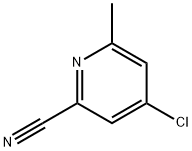
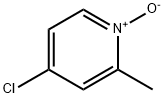
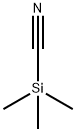
General procedure for the preparation of 4-chloro-6-methylpyridinecarbonitrile: 4-chloro-2-methylpyridine-N-oxide (8.97 g, 62.5 mmol, 1.00 eq.) was dissolved in dichloromethane (CH2Cl2) and dried with anhydrous magnesium sulfate (MgSO4). The resulting solution was transferred to a pre-flame-dried round-bottomed flask and dichloromethane was replenished to a total volume of 188 mL. Subsequently, trimethylcyanosilane (TMS-cyanide, 10 mL, 75 mmol, 1.2 equiv.) was added and the reaction mixture was stirred for 15 min. Dimethylcarbamoyl chloride (6.9 mL, 75 mmol, 1.2 eq.) was added slowly and dropwise over 20 minutes and the reaction continued to be stirred for 24 hours. After that, 1 equivalent of trimethylcyanosilane and dimethylcarbamoyl chloride was added additionally and the reaction was continued with stirring for 72 hours. After completion of the reaction, the reaction solution was adjusted to alkaline with 10% potassium carbonate (K2CO3) solution and extracted with dichloromethane (3×). The organic phases were combined, dried with anhydrous magnesium sulfate, filtered and concentrated under reduced pressure. Purification by fast column chromatography on silica gel afforded 7.2 g (75% yield) of the target compound 4-chloro-6-methylpyridinecarbonitrile as a white solid. NMR hydrogen spectrum (400 MHz, DMSO-d6) δ 8.13 (d, J = 1.6 Hz, 1H), 7.82 (d, J = 1.7 Hz, 1H), 2.52 (s, 3H); electrospray mass spectrometry (ES-MS) [M + 1]+: m/z calculated value.