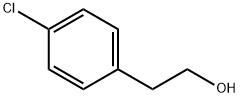
4-Chlorophenylethanol is a permitted food flavoring in my country. It can be used to blend rose-scented essential oils and various floral fragrances, such as jasmine, clove, and orange blossom. It is also widely used in the formulation of soaps and cosmetic fragrances.
A 100 mL oven-dried round-bottom flask fitted with a stir bar was placed under positive pressure of argon and subjected to three evacuation/backfill cycles under high vacuum. Samarium(II) iodide (6 eq, THF solution, 0.080 M) was added, followed by Et3N (36 eq) and H2O (36 eq. Decanamide solution (1.0 eq, 1.0 mmol, reserve solution stored in THF, 5.0 mL) was added to the precast samarium(II)iodide/amine/H2O complex and the reaction mixture was stirred for 18 h. Excess SmI2 was oxidized by passing bubbly air into the reaction mixture. the reaction mixture was diluted with CH2Cl2 (100 mL) and NaOH (50 mL, 1 N) Dilute the reaction mixture. The aqueous layer was extracted with CH2Cl2 (2 x 100 mL), the organic layers were combined, dried over Na2SO4, filtered and concentrated. Analysis of the crude reaction mixture showed a conversion of >98% and a selectivity of >98:2. Chromatographic purification afforded decan-1-ol. Characterization data are included in the following sections.2-(4-Chlorophenyl)acetamide (Table 2, entry 12) According to the general procedure, after treatment with CH2Cl2/NaOH (1.0 N) and chromatography of the title compound in 85% yield, 2-(4-chlorophenyl)acetamide was at room temperature. The compound 4-chlorophenethyl alcohol was obtained.