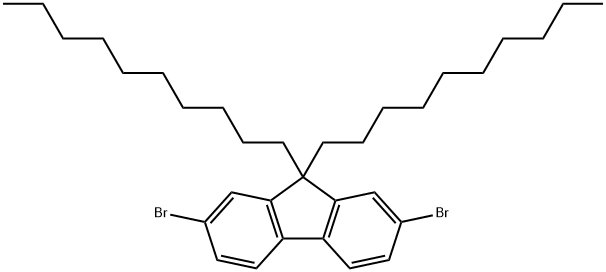
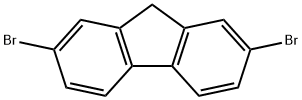
Example 1 Synthesis of 2,7-dibromo-9,9-didecylfluorene: 2,7-dibromofluorene (64.8 g, 0.20 mol), potassium iodide (3.0 g, 0.018 mol), finely powdered potassium hydroxide (56.0 g, 1 mol) and dimethyl sulfoxide (150 mL) were added to a three-necked, round-bottomed flask under nitrogen protection with mechanical stirring. The flask was cooled in an ice-water bath and decyl bromide (90 mL, 95.94 g, 0.434 mol) was subsequently added in four batches. Note that the internal temperature rises significantly during the addition process. Once the last addition was completed, the reaction mixture was continued to be stirred at room temperature for 4 hours. At the end of the reaction, the reaction was quenched by the addition of water (200 mL) and the solid product was collected by filtration. The resulting solid was dried in a desiccator containing phosphorus pentoxide for 16 hours. The crude product was purified by ethanol recrystallization to afford 2,7-dibromo-9,9-didecylfluorene as white crystals (melting point 40-41 °C) in 92.7% yield. Mass spectrometry analysis showed molecular ion peaks m/z of 602, 604, 606 (M+), fragment ion peaks m/z of 461, 463, 465 (M-C10H21), and 382, 384 (461-Br). Elemental analysis results: calculated values for C33H48Br2: C, 65.56%; H, 8.00%; Br, 26.44%. Measured values: C, 64.99%; H, 8.21%; Br, 27.25%.