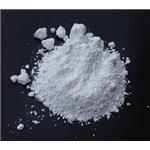
white to light yellow crystal powde
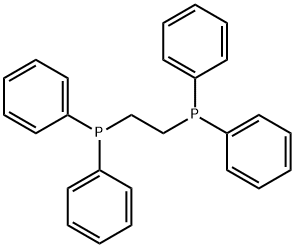
1,2-Bis(diphenylphosphino)ethane is a bidendate ligand used in coordination chemistry to prepare metal complexes. It is involved in the metal-catalyzed allylic alkylation and decarboxylation of allylic esters. It is also used in 1,3-diene synthesis. Further, it is used in cycloaddition reactions and carbonylation reactions. In addition to this, it is used to prepare bis(dicyclohexylphosphino)ethane by hydrogenation.
ChEBI: 1,2-bis(diphenylphosphino)ethane is a tertiary phosphine and a member of diphosphanes. It has a role as an allergen.
reagent type: ligand
reaction type: C-C Bond Formation
reagent type: ligand
reaction type: Carbonylations
reagent type: ligand
reaction type: Cycloadditions
reagent type: ligand
reaction type: Decarboxylations
reagent type: ligand
reaction type: Diels-Alder Reaction
reagent type: ligand
reaction type: Heck Reaction
reagent type: ligand
reaction type: Negishi Coupling
reagent type: ligand
reaction type: Suzuki-Miyaura Coupling
1,2-Bis(diphenylphosphino)ethane (DPPE) and its synthetic analogues are important structural motifs in organic synthesis, particularly as diphosphine ligands with a C2-alkyl-linker chain. Since DPPE is known to bind to many metal centers in a bidentate fashion to stabilize the corresponding metal complex via the chelation effect originating from its entropic advantage over monodentate ligands, it is often used in transition-metal-catalyzed transformations.
Several synthetic methods to produce 1,2-Bis(diphenylphosphino)ethane (DPPE) exist; however, most of these methods are limited to substitution reactions of highly reactive alkali metal diphenylphosphides (e.g., Ph2PM; M = Li or Cs) with 1,2-dihaloethanes (X−CH2−CH2−X; X = Cl, Br, and I) in an SN2 fashion (Eq. 1). Moreover, there are a few methods using the alkoxide-base (KOt-Bu)-catalyzed hydrophosphination of vinyl phosphines (Eq. 2) with diphenylphosphines9 or the dihydrophosphination of acetylene gas (Eq. 3). [1]

Recrystallise it from aqueous EtOH or *C6H6. The dimethiodide, when recrystallised from MeOH has m 305-307o, and the dioxide when recrystallised from toluene or DMF (needles), or *C6H6 (plates) has m 252-254o (276-278o) [Isslieb et al. Chem Ber 92 3175 1959, NMR: Aquiar et al. J Org Chem 29 1660 1964, B.ckvall et al. J Org Chem 52 5430 1987]. [Beilstein 16 IV 958.]
[1] Takano, H., Katsuyama, H., Hayashi, H., Kanna, W., Harabuchi, Y., Maeda, S., & Mita, T. (2022). A theory-driven synthesis of symmetric and unsymmetric 1,2-bis(diphenylphosphino)ethane analogues via radical difunctionalization of ethylene. Nature Communications, 13 1, 7034.
https://doi.org/10.1038/s41467-022-34546-5