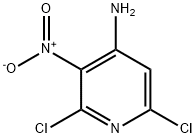
2,6-DICHLORO-3-NITRO-4-AMINOPYRIDINE is a synthetic compound that inhibits tyrosine kinases. It is an isomer of 2,6-Dichloropyridine and has been shown to inhibit the growth of lymphoma cells in vitro. 2,6-DICHLORO-3-NITRO-4-AMINOPYRIDINE has three substitutions on the pyridine ring as compared to 2,6-Dichloropyridine. The substitutions are thought to be responsible for the increased hydrophilic properties of this compound. This may lead to increased cellular uptake and better bioavailability.
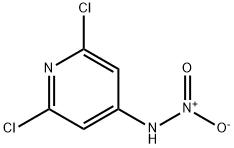
2,6-Dichloro-4-nitroaminopyridine (CAS: 2587-03-3, 1.66 g, 7.98 mmol) was used as a raw material, which was slowly added to 11 mL of concentrated sulfuric acid and stirred until completely dissolved. The reaction mixture was heated on a steam bath for 30 min. Upon completion of the reaction, the solution was cooled to room temperature and slowly poured into 28 g of crushed ice, which immediately formed a brown precipitate. The mixture was further cooled in an ice bath and the pH was adjusted dropwise to 7 by adding concentrated ammonium hydroxide solution.Subsequently, the reaction slurry was allowed to stand at -10 °C overnight. On the following day, the precipitate was collected by filtration through a Büchner funnel, washed thoroughly with pre-cooled deionized water and finally dried in a vacuum drying oven to afford the target product 4-amino-2,6-dichloro-3-nitropyridine (1.30 g, 78% yield) as a light tan solid.
[1] Bioorganic and Medicinal Chemistry, 2008, vol. 16, # 3, p. 1511 - 1530
[2] Patent: WO2006/13195, 2006, A1. Location in patent: Page/Page column 44
[3] Patent: US2012/289497, 2012, A1. Location in patent: Page/Page column 51; 53
[4] Patent: EP2524917, 2012, A1. Location in patent: Page/Page column 58-60
[5] Patent: WO2017/216293, 2017, A1. Location in patent: Page/Page column 67