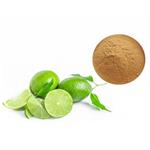
Besides medicinal uses, limes are widely used in food, health products, fragrances, skincare and cosmetics, and daily chemical products. Lime is one of the world's four most famous fruits, with a juice content as high as 43%, and its juice is rich in amino acids and vitamin C, ranking first among citrus fruits. Through deep processing, it can be used to produce beverages, canned goods, preserves, pectin, and jellies. Lime peel can be used to extract aromatic oils and orange peel essential oil. Aromatic oils are essential raw materials in the chemical, food, and textile industries; orange peel essential oil is effective for chronic bronchitis and can be used to develop health sprays and other products to relieve chronic bronchitis.
Infusions of the fruit can be used to reduce fever, relieve headaches, and calm palpitations. The juice helps the body eliminate waste. In traditional Chinese medicine, the unripe fruit is called "Zhi Shi," which helps relieve flatulence and abdominal distension. The essential oil of lime, especially neroli oil, is a sedative used to lower heart rate, relieve palpitations, promote sleep, and treat digestive disorders. Diluted neroli oil is used for massage. The flower distillate can be used as an antispasmodic and sedative.
Refer to ORANGE BLOSSOMS, ABSOLUTE.
Bitter orange oil is obtained by pressing fresh peel fromthe fruits of C. aurantium
L. (Rutaceae). It is produced mainly in Mediterranean countries and is
a pale yellow to yellowish-brown liquid with a slightly mandarin-like odor
and a somewhat bitter aroma.
d2020 0.840–0.860; n20D 1.472–1.476; α20D +88 ° to +98 °; evaporation
residue: 3.5–6%; solubility: 1 vol in ≤8 vol. 90% ethanol. Composition by
GC: limonene 93–95%; linalyl acetate 0.5–1%; decanal tr. 0.3% (data of Mediterranean type; data for American and Equatorial type may differ slightly).
Although limonene is also the main component, at 92.95–95%, the content
of other constituents differs from that of sweet orange oil; that is, its
aldehyde content is lower and its ester (e.g., linalyl and geranyl acetate) content is higher.
In addition to the fruits, other parts of bitter orange tree, C. aurantium L.,
also serve for the production of fragrant raw materials: Neroli oil
and orange flower absolute are obtained from the flowers, and the twigs and
leaves yield the so-called petitgrain bigarade oil.
Worldwide production of bitter orange oil ismuch lower than that of other
pressed peel oils. The preferred quality is produced in Spain (Seville bitter
orange oil). Bitter orange oil is predominantly used for flavoring alcoholic
beverages (liqueurs).
Neroli bigarade is a product obtained by processing flowers of the bitter orange tree. The blossoming flowers are the
only part used. Neroli bigarade has a very powerful floral odor with a bitter flavor. For additional information, see Orange, Bitter.
Bitter orange peel oil can be obtained by the following methods: (1) expression of fresh fruit rinds (peel) using suitable
machinery that ruptures the oil-bearing cells, followed by separation and purification by centrifugation or (2) steam distillation of
peels. The quality of the product obtained by expression is quite different and considered of much higher quality than oil obtained by
steam distillation. The oil has a fragrant, bitter flavor.
The absolute obtained from concrete is a yellow-red liquid with an extremely suave odor typical
of the flower
Oil obtained by expression has a deep-yellow color.
Found in the fresh peel of the fruit Citrus aurantium Linne (Fam. Rutaceae).
By the expression of the fresh peel of the fruit, Citrus aurantium Linne, by various methods, without the use of heat.
Extractives and their physically modified derivatives. Citrus aurantium, Citrus.
Essential oil composition
Dried flowers and leaves of bitter orange had a similar flavonoid pattern, but the flavonoid levels of flowers
were higher than those of leaves. The mean levels of the principal flavonoid compounds were, respectively, total flavonoids 12.35 and
1.06%, neohesperidin 5.44 and 0.08%, naringin 1.93 and 0.06%, eriocitrin 0.38 and 0.25%.
Essential oil composition
The main constituents include d-limonene, various acids, aldehydes and diesters.