These Secondary Standards are qualified as Certified Reference Materials. These are suitable for use in several analytical applications including but not limited to pharma release testing, pharma method development for qualitative and quantitative analyses, food and beverage quality control testing, and other calibration requirements.
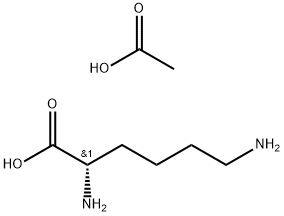
Pharmaceutical secondary standards for application in quality control provide pharma laboratories and manufacturers with a convenient and cost-effective alternative to the preparation of in-house working standards. L-Lysine is an essential proteinogenic α-amino acid, containing basic side chain and is hydrophilic in nature. L-Lysine is actively used in the form of its acetate salt. It serves as a precursor for secondary metabolites, such as β-lactam antibiotics. It also serves as a precursor for the biosynthesis of α-aminoadipic acid.
L-Lysine is an essential proteinogenic α amino acid used in a wide range of applications including as a supplement in cell culture media; a substrate of enzymes such as L-lysine oxidase (EC 1.4.3.14); a component of poly-lysine polymers; and a substrate for oxidation and glycation mechanism studies.
L-Lysine acetate (40 μg/kg; p.o.) ameliorates arterial calcification in adenine rats and protects the femora from osteoporotic changes in adenine rats[1].
L-Lysine acetate (10 and 400 mg/kg; i.g. and p.o.; Male mice) inhibits pancreatic tissue damage[2].
| Animal Model: | Male mice[2] |
| Dosage: | 10 and 400 mg/kg |
| Administration: | Intraperitoneal injection and oral administration; for 15 days. |
| Result: | Inhibited the release of the inflammatory cytokine IL-6 and enhance antioxidant activity. |
Microbial Metabolite; Human Endogenous Metabolite