1. Starting from p-hydroxyacetophenone, a synthesis is achieved through 8 steps: bromination, hydrolysis, amination, hydrolysis, neutralization, catalytic hydrogenation, hydrogenolysis, and salt formation. The overall yield is 11%–13%. However, this method requires harsh reaction conditions, causes severe waste pollution, and has high costs. 2. Using salicylaldehyde and acyl chloride as raw materials, 4-bromoacetyl salicylaldehyde and 4-chloroacetyl salicylaldehyde are obtained by Friedel-Crafts acylation. These are then converted to 5-11-dimethylethyl)amino[acetyl-2-hydroxybenzaldehyde hydrochloride via a co-reduction reaction with potassium borohydride and zinc chloride at room temperature, followed by salt formation with sulfuric acid to obtain salbutamol sulfate.
3. Using salicylaldehyde and tert-butylamine as starting materials, a three-step one-pot reaction of condensation, esterification, and Fries rearrangement is carried out to prepare 2-chloro-1-{〔(1,1-dimethylethyl)iminomethyl-4-hydroxyphenyl}-ethyl ketone. Then, a three-step one-pot reaction of condensation, hydrolysis, and salt formation is carried out to convert it into 5-{〔(1,1-dimethylethyl)aminoacetyl}-2-caryophyllene benzaldehyde hydrochloride. Finally, the product is obtained by neutralization with sodium methoxide, catalytic transfer hydrogenation reduction, and salt formation.
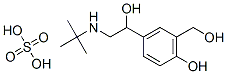
Albuterol sulfate (Brand name: PROVENTIL® HFA) is the sulfate form of albuterol which is also known as salbutamol. It is a kind of short-acting, selective beta2-adrenergic receptor agonist being capable of opening up the medium and large airways in the lungs. It is mainly used for the treatment of bronchospasm (induced by bronchial asthma or exercise) as well as chronic obstructive pulmonary disease (COPD). Albuterol sulfate takes effects through directly biding to the beta (2)-adrenergic receptors in the lung and causing relaxation of bronchial smooth muscles. This relaxation is mediated by its effect of stimulating cAMP production through activating adenylate cyclase, further inhibiting the phosphorylation of myosin and lowering the intracellular calcium level. Albuterol sulfate can also be used to treat acute hyperkalemia of the blood.
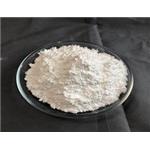
Albuterol sulfate is a white or practically white powder, freely soluble in water and slightly soluble in ethanol.
Albuterol Sulfate belongs to a class of bronchodilator drugs called β2-adrenoceptor agonists. It is a prescription medicine used to treat symptoms of bronchospasm. Albuterol Sulfate may be used alone or with other medications.
ChEBI: Albuterol sulfate is an ethanolamine sulfate salt. It is functionally related to an albuterol.
Accuneb (Dey); Proair (IVAX); Proventil
(Schering); Ventolin (GlaxoSmithKline); Volmax (Muro);
Vospire (Odyssey).
Albuterol belongs to the class of medicines known as bronchodilators. It is also called a short-acting beta-agonist (SABA).
Non-selective β -adrenergic agonist, more potent at β 2 than β 1 receptors.
Veterinary Drugs and Treatments
Albuterol is used principally in dogs and cats for its effects on bronchial
smooth muscle to alleviate bronchospasm or cough. It is also
used in horses as a bronchodilator.
Albuterol Sulfate is the sulfate salt of the short-acting sympathomimetic agent albuterol, a 1:1 racemic mixture of (R)-albuterol and (S)-albuterol with bronchodilator activity. Albuterol stimulates beta2-adrenergic receptors in the lungs, thereby activating the enzyme adenylate cyclase that catalyzes the conversion of ATP to cyclic-3',5'-adenosine monophosphate (cAMP). Increased cAMP concentrations relax bronchial smooth muscle, relieve bronchospasms, and reduce inflammatory cell mediator release, especially from mast cells. To a lesser extent albuterol stimulates beta1-adrenergic receptors, thereby increasing the force and rate of myocardial contraction.
https://en.wikipedia.org/wiki/Salbutamol
https://www.drugbank.ca/drugs/DB01001
http://www.rxlist.com/albuterol-sulfate-drug/indications-dosage.htm


![1-benzyl-4-hydroxy-2-methyl-1H-benzo[d]imidazole-6-carboxylic acid pictures](/ProductImageEN/2024-03/Small/5569a4da-3a5e-4d8b-84be-8c30ff364ad1.png)