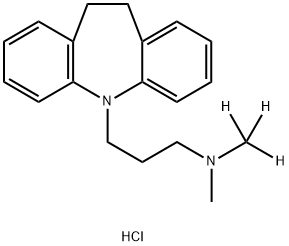
[1] Russak EM, et al. Impact of Deuterium Substitution on the Pharmacokinetics of Pharmaceuticals. Ann Pharmacother. 2019;53(2):211-216. DOI:
10.1177/1060028018797110[2] Alburquerque-González B, et al. New role of the antidepressant imipramine as a Fascin1 inhibitor in colorectal cancer cells. Exp Mol Med. 2020 Feb;52(2):281-292. DOI:
10.1038/s12276-020-0389-x[3] Jeon SH, et al. The tricyclic antidepressant imipramine induces autophagic cell death in U-87MG glioma cells. Biochem Biophys Res Commun. 2011 Sep 23;413(2):311-7. DOI:
10.1016/j.bbrc.2011.08.093[4] Xia Z, et al. The antidepressants imipramine, clomipramine, and citalopram induce apoptosis in human acute myeloid leukemia HL-60 cells via caspase-3 activation. J Biochem Mol Toxicol. 1999;13(6):338-47. DOI:
10.1002/(sici)1099-0461(1999)13:63.0.co;2-7[5] Ramirez K, et al. Imipramine attenuates neuroinflammatory signaling and reverses stress-induced social avoidance. Brain Behav Immun. 2015 May;46:212-20. DOI:
10.1016/j.bbi.2015.01.016[6] Balkovetz DF, et al. Evidence for an imipramine-sensitive serotonin transporter in human placental brush-border membranes. J Biol Chem. 1989 Feb 5;264(4):2195-8. PMID:2914900