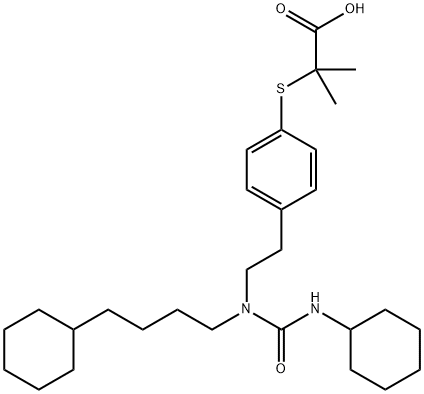
Peroxisome proliferator-activated receptor-α (PPARα) is a ligand-activated transcription factor involved in the regulation of lipid homeostasis. Activation of PPARα results in expression of a variety of genes, particularly those involved in fatty acid β-oxidation, binding, and transport. GW 7647 is a potent, selective agonist of human and murine PPARα It activates human PPARα, PPARγ, and PPARδ with EC50 values of 0.006, 1.1 and 6.2 μM, respectively, in a GAL4-PPAR binding assay. Similar EC50 values of 0.001, 1.3, and 2.9 were observed with the murine receptors. GW 7647 lowered triglycerides 93% and 60% in fat-fed hamsters and rats, respectively, at a dose of 3 mg/kg.
GW 7647 is a potent PPARα agonist with 200-fold selectivity over PPARγ and PPARδ. It can also be used for regenerative cardiac cell therapies.
GW7647 has been used as a peroxisome proliferator-activated receptor α (PPAR α) ligand:
- in defatting medium to treat primary human hepatocytes
- to test its effect on the glycolytic function in cardiomyocytes
- to test its effect on infant mouse heart
- in breast cancer MDA-MB-231 cells to activate PPARs
ChEBI: A monocarboxylic acid that is 2-(phenylsulfanyl)isobutyric acid in which the phenyl group is substituted at the para- position by a 3-aza-7-cyclohexylhept-1-yl group in which the nitrogen is acylated by a (cyclohexylamino)carbonyl group.
A cell-permeable urea-substituted thioisobutyric acid (ureido-TiBA) compound that acts as a potent and selective PPARα agonist (PPARα, γ and δ - EC50 = 6 nM, 1.1 μM and 6.2 μM for human; 1 nM, 1.3 μM and 2.9 μM for murine, respectively). Also displays in vivo lipid-lowering activity in rats.
Potent and highly selective PPAR α agonist (EC 50 values are 6, 1100 and 6200 nM for human PPAR α , PPAR γ and PPAR δ receptors respectively). Modulates oleate metabolism and mitochondrial enzyme gene expression in mature myotubules in vitro . Has lipid-lowering effects following oral administration in vivo .
GW7647 reduces serum triglyceride levels and enhances hepatic expression of genes associated with β-oxidation. Usage of GW7647 along with metformin in conditions of liver steatosis or injury improves the enzymatic levels of aspartate transaminase (AST) and alanine transaminase (ALT) in serum.
[1] PETER J. BROWN. Identification of a subtype selective human PPARα agonist through parallel-array synthesis[J]. Bioorganic & Medicinal Chemistry Letters, 2001, 11 9: Pages 1225-1227. DOI:
10.1016/s0960-894x(01)00188-3[2] LISA BAUMGARTNER. Lignan Derivatives from Krameria lappacea Roots Inhibit Acute Inflammation in Vivo and Pro-inflammatory Mediators in Vitro[J]. Journal of Natural Products , 2011, 74 8: 1779-1786. DOI:
10.1021/np200343t[3] STEPAN ALESHIN. Peroxisome proliferator-activated receptor (PPAR)-gamma positively controls and PPARalpha negatively controls cyclooxygenase-2 expression in rat brain astrocytes through a convergence on PPARbeta/delta via mutual control of PPAR expression levels.[J]. Molecular Pharmacology, 2009, 76 2: 414-424. DOI:
10.1124/mol.109.056010