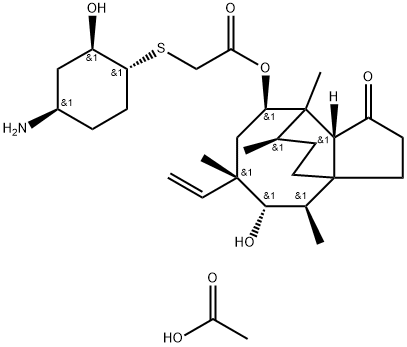
Lefamulin acetate is a white to off-white solid. It is a stable compound (requiring no special storage conditions) which is highly soluble in water and 0.9% sodium chloride solution (>300mg/ml). The hydration level of lefamulin acetate at ambient conditions is typically below 1% w/w.
Lefamulin (BC-3781) acetate is an orally active antibiotic. Lefamulin acetate inhibits protein synthesis by binding to the peptidyl transferase center of the 50S bacterial ribosome. Lefamulin acetate has anti-inflammatory activity. Lefamulin acetate can be used in the research of bacterial infections, such as bacterial pneumonia.
Lefamulin acetate is a single stereoisomer semi-synthetically derived from pleuromutilin, a homochiral, natural fermentation product of known absolute stereochemistry. Lefamulin acetate is a diastereomer with R-configuration at carbons of the cyclohexane moiety. The absolute configuration of the active substance has been confirmed by single-crystal structure determination.
Lefamulin acetate has activity against Gram-positive bacteria including MRSA, and atypical bacteria, especially those causing CAPB (i.e. Streptococcus pneumonia, Haemophilus influenzae, Mycoplasma pneumoniae, Legionella pneumophila, Chlamydophila pneumoniae). It also has activity against Gram-negative organisms.
Lefamulin (10-140 mg/kg, s.c.) acetate shows anti-inflammatory effect on LPS-induced lung neutrophilia mouse model[4].
Lefamulin (1.25-160 mg/kg, s.c.) acetate shows antibacterial effect in S. pneumoniae or S. aureus challenged lung infection mice[5].
| Animal Model: | LPS-induced lung neutrophilia mouse model[4] |
| Dosage: | 10-140 mg/kg |
| Administration: | Subcutaneous injection (s.c.) |
| Result: | Reduced BALF neutrophil cell counts.
Reduced pro-inflammatory cytokine (TNF-α, IL-6, IL-1β, and GM-CSF), chemokine (CXCL-1, CXCL-2, and CCL-2) and MMP-9 levels in mouse lung tissue.
|