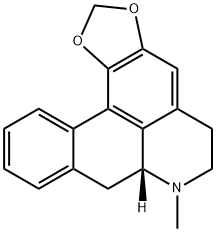
Roemerine (30 mg/kg, i.p., once every three days for 30 days) significantly inhibited tumor growth in the prostate cancer BALB/C nude mouse model (established by subcutaneous implantation of RM-1 cells)[2].
Roemerine (20 mg/kg, i.p., once daily for 2 days) increases survival and reduced bacterial loads in multiple organs in the MRSA XJ75302-induced sepsis BALB/C mouse model[5].
| Animal Model: | Prostate cancer BALB/C nude mouse model (established by subcutaneous implantation of RM-1 cells)[3] |
| Dosage: | 30 mg/kg |
| Administration: | Intraperitoneal injection (i.p.), once every three days for 30 days |
| Result: | Significantly reduced tumor volume and weight in the experimental group (P < 0.05), with an inhibition rate of 41.2%. |
| Animal Model: | MRSA XJ75302-induced sepsis BALB/C mouse model[5] |
| Dosage: | 20 mg/kg |
| Administration: | Intraperitoneal injection (i.p.), once daily, for 2 days |
| Result: | Increased the 7-day survival rate of mice to 58.3% (p < 0.05) and reduced bacterial loads in the liver (4.71 to 4.38 log CFU/mL), kidney (4.37 to 3.79 log CFU/mL), heart (5.44 to 3.76 log CFU/mL), and blood (6.52 to 4.55 log CFU/mL).
Note: CFU/mL represents the number of bacteria per milliliter of culture medium or tissue sample that can form colonies (CFU, Colony-Forming Units). |