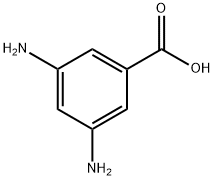
3,5-Diaminobenzoic acid is an analog of diatriazoate, which has been shown to have antigenicity properties towards the monoclonal antibodies. It is used as pharmaceutical intermediate.
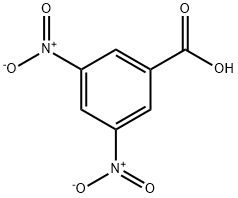
General procedure for the synthesis of 3,5-diaminobenzoic acid from 3,5-dinitrobenzoic acid: 3,5-dinitrobenzoic acid (51 g, 0.24 mol) and 300 mL of water were added to a 1 L stainless steel high-pressure reactor and stirred thoroughly until homogeneous. Subsequently, the pH of the reaction system was adjusted to 7-8 using an aqueous sodium hydroxide solution with a mass percent concentration of 20%. 0.25 g of Ni-Yb-Al triple-acting catalyst was added followed by three nitrogen substitutions to remove air. The hydrogen pressure was controlled at 0.2 MPa and the reaction temperature was maintained at 25-30 °C until the reaction pressure decreased significantly, indicating the completion of the reaction. Upon completion of the reaction, the catalyst was recovered by filtration. The filtrate was adjusted to pH 3 with concentrated hydrochloric acid to precipitate the target product 3,5-diaminobenzoic acid. The solid product was collected by filtration, washed with water and finally dried under vacuum to give 36.5 g of 3,5-diaminobenzoic acid in 98.8% yield and 98.9% HPLC purity. The retention time of the product was consistent with the standard control.
Crystallise the acid from water. The dihydrochloride has m 226-228o(dec). [Beilstein 14 H 453, 14 III 1179, 14 IV 1304.]
[1] Patent: CN105949076, 2016, A. Location in patent: Paragraph 0025; 0026; 0031; 0036; 0040; 0045; 0053
[2] Journal of the Iranian Chemical Society, 2014, vol. 11, # 6, p. 1587 - 1592
[3] Synthetic Communications, 2000, vol. 30, # 20, p. 3639 - 3644
[4] Indian Journal of Chemistry - Section B Organic and Medicinal Chemistry, 2000, vol. 39, # 9, p. 709 - 711
[5] Synthetic Communications, 2003, vol. 33, # 2, p. 281 - 289