Soluble in a mixed solvent of DMSO, chloroform and methanol, insoluble in petroleum ether and chloroform. Derived from the Umbelliferae plant Foeniculum vulgare
Casticin is a biological compound known to induce human glioma cell death through an apoptotic mechanism and disruption of the mitotic cycle.
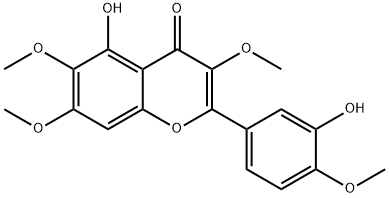
ChEBI: A tetramethoxyflavone that consists of quercetagetin in which the hydroxy groups at positions 3, 6, 7 and 4' have been replaced by methoxy groups. It has been isolated from Eremophila mitchellii.
Casticin (20 mg/kg, p.o.) has toxic effect on the liver in mice with CCl4-and BDL-induced hepatic injury. Casticin attenuates liver fibrosis induced by CCl4 or BDL in vivo. Casticin inhibits HSC activation and collagen matrix expression by blocking TGF-β/Smad signaling in vivo[2].