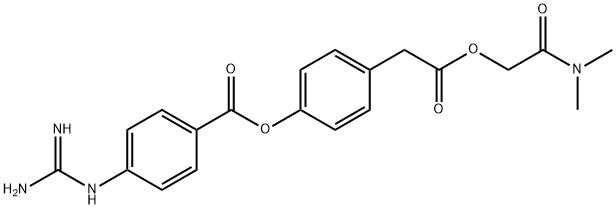
Camostat mesylate: C20H22N4O5CH3SO3H. [59721-29-8]. Crystallized from methanol-ether, melting point 150-155°C. Soluble in water. Acute toxicity LD50 in mice and rats (mg/kg): 4040-4500, 4392-4720 oral.
Camostat is an orally active trypsin inhibitor. Camostat can reduce pancreatic fibrosis induced by repeated administration of superoxide dismutase inhibitors in rats, and decrease the proliferation and activation of pancreatic stellate cells (PSCs)[1].
ChEBI: Camostat is a benzoate ester resulting from the formal condensation of the carboxy group of 4-guanidinobenzoic acid with the hydroxy group of 2-(dimethylamino)-2-oxoethyl (4-hydroxyphenyl)acetate. It is a potent inhibitor of the human transmembrane protease serine 2 (TMPRSS2) and its mesylate salt is currently under investigation for its effectiveness in COVID-19 patients. It has a role as an anticoronaviral agent, a serine protease inhibitor, an antifibrinolytic drug, an anti-inflammatory agent, an antiviral agent, an antihypertensive agent and an antineoplastic agent. It is a tertiary carboxamide, a carboxylic ester, a diester, a member of guanidines and a benzoate ester. It is functionally related to a 4-guanidinobenzoic acid. It is a conjugate base of a camostat(1+).