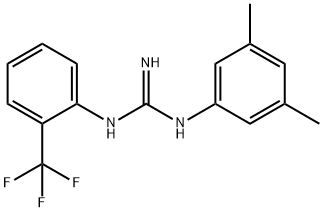
1A-116 (3 mg/kg; i.v.; once a day for 21 days) demonstrates a high antimetastatic activity with about 60% formation reduction of total metastatic lung colonies in vivo and shows no apparent toxicity[1].
1A-116 (20 mg/kg; i.p.; once a day, 73 days for ZT12, 68 days for ZT3) increases survival time when treated at ZT12 compare to ZT3 in tumor-bearing mice. (ZT: Zeitgeber time 12 (ZT12) defined as the time of lights off (local time 7 p.m.) and ZT0 defined as lights on (local time 7 a.m.))[2].
1A-116 shows good oral availability[3].
| Animal Model: | Female BALB/c inbred mice (8 to 10-week-old; average 20 g)[1] |
| Dosage: | 3 mg/kg |
| Administration: | Intravenous injection; once a day for 21 days. |
| Result: | Demonstrated a high antimetastatic activity. |
| Animal Model: | Male NIH Swiss foxN1(/) nude mice (2-month-old; GBM model)[2]. |
| Dosage: | 20 mg/kg |
| Administration: | Intraperitoneal injection (at ZT3, ZT12); once a day, 73 days for ZT12, 68 days for ZT3. |
| Result: | Increased survival time when treated at ZT12 compared to ZT3 in tumor-bearing mice. |